
Market
17 September 2026 / 7 min
YachtAddress Editorial
By Patric Daccache
The Superyacht Market Is Booming. In Theory.
The top end is setting records. The middle of the market is discovering that more yachts, more stands and more champagne do not automatically produce more buyers.
360
pre-owned sales over 30m in 2025
Fraser reported data
$6.44bn
reported 2025 transaction value
Fraser reported data
1,093
yachts over 24m in build or on order
BOAT International order book
511 vs 444
new market entries against H1 2026 transactions
IYC reported data
Value figures are cited as reported transaction value or last-known asking value according to the source.
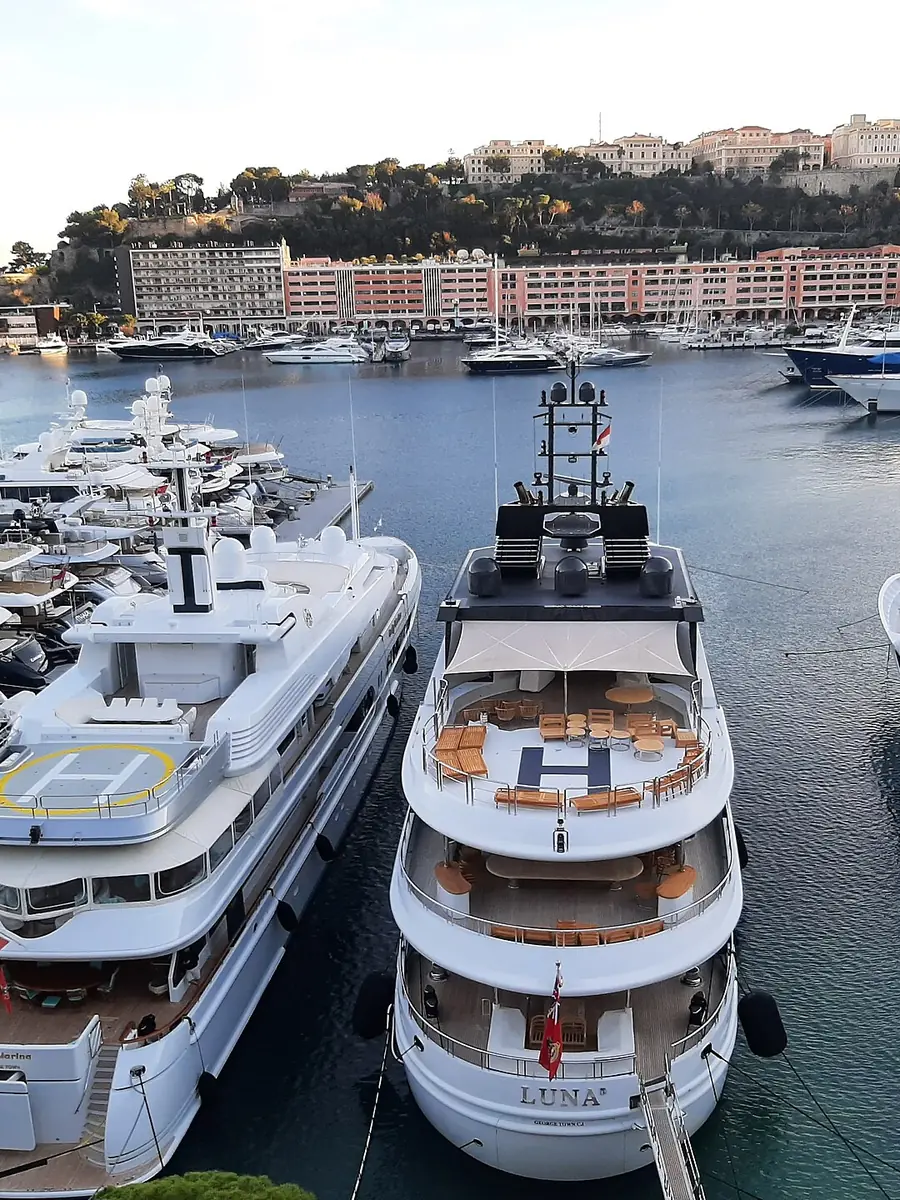
By Wednesday afternoon in Monaco, the market will look unstoppable.
More than 500 exhibitors. A harbour full of yachts. More yachts waiting offshore. Builders, brokers, designers, lawyers, managers, suppliers, advisers and several thousand crew keeping every surface free of fingerprints. The champagne will be cold, the stands will be full and somebody will describe the market as resilient before lunch.
It may even be true.
The difficulty is that "the superyacht market" is not one market. A 110-metre custom project, a recent 65-metre Feadship and a 15-year-old 38-metre production yacht may all appear in the same annual report. Economically, they have very little in common.
The market is not collapsing. It is also not booming evenly. It is splitting.
A boom in value is not the same as a boom in liquidity
Fraser counted 360 pre-owned yacht sales above 30 metres in 2025, only 4% more than in 2024. The reported value of those transactions rose 36% to $6.44 billion.
That is a spectacular value increase attached to a fairly ordinary increase in the number of yachts sold.
Edmiston's dataset tells the same story from a different angle. Yachts asking more than €40 million represented only 7% of transactions, but generated 52% of total market value.
A small number of very large sales can therefore make the market look considerably healthier from a distance. The numbers are not wrong. They are simply being pulled uphill by the biggest yachts.
The yacht at €12 million that has been for sale for 19 months does not feel the benefit of a €300 million transaction elsewhere in the fleet.
The datasets disagree. The direction does not.
Industry reports do not all count the same yachts or the same transactions.
BoatPro recorded 281 brokerage sales above 24 metres in the first half of 2026, slightly ahead of the same period in 2025, with €4.05 billion in last-known asking value. IYC's broader dataset recorded 444 transactions and a 15% year-on-year decline.
Different length thresholds, new-build treatment, off-market visibility and transaction definitions produce different headlines. This is why a single annual number should not be used as a weather forecast for every yacht.
What the reports broadly agree on is more useful: value is concentrated at the top, larger yachts remain resilient, and buyers have become more selective across the rest of the market.
Fewer hulls. More yacht.
The new-build market shows the same split.
BOAT International's 2026 Global Order Book counted 1,093 yachts above 24 metres under construction or on order. That was 3.95% fewer projects than the previous year and 9.14% below the 2023 peak.
Yet total gross tonnage increased by approximately 4%, while average gross tonnage rose 8.7%.
In plain English, the industry is building fewer yachts, but the yachts are getting larger.
This is not evidence of a broad volume boom. It is evidence that the wealthiest part of the market remains capable of placing very large orders.
Buyers have their leverage back
IYC reported 511 yachts entering the market against 444 completed transactions during the first half of 2026.
That changes behaviour.
A buyer no longer has to accept the first reasonable yacht before somebody else takes it. They can compare condition, pedigree, survey history, specification, maintenance records, refit claims and price. They can wait. They can negotiate. They can ask why the yacht beside it offers more for less.
For sellers, the cost of being average has increased.
A yacht with the wrong price, tired photography, unclear refit information and an interchangeable listing page may still receive enquiries. It is far less likely to create urgency.
The middle is where the discomfort sits
The strongest yachts remain strong. Recent delivery, respected yard, desirable size, credible maintenance, sensible price. Those yachts can still move quickly.
The uncomfortable part of the market is older inventory between roughly 30 and 50 metres. There is more choice, the ownership cost is visible, refit exposure matters and a buyer can compare several broadly similar yachts without leaving the first page of a portal.
This is where days on market grow. Price reductions arrive. Central agencies approach renewal. A new brochure is commissioned, although the last brochure was not really the problem.
The market has not run out of buyers. It has run out of reasons for a buyer to choose an undifferentiated yacht at an optimistic price.
Charter is resilient, but supply is not standing still
Charter demand remains healthier than many expected. IYC reported winter bookings up approximately 10% year on year for the 2025/26 season.
The less comfortable number is supply. More than 2,300 yachts above 20 metres are now available for charter, with the global fleet growing by approximately 6.5% per year.
Clients are also booking later, comparing value more carefully and paying closer attention to the total cost once APA, fuel and itinerary are considered.
A yacht can therefore operate in a growing charter market and still lose weeks. Market growth does not guarantee individual utilisation.
What this means for yacht marketing
Marketing cannot repair the wrong asking price. It cannot hide deferred maintenance from a surveyor. It cannot turn an ordinary specification into scarcity.
It can remove unnecessary friction.
A buyer should be able to understand what makes the yacht relevant, see the media properly, reach the GA and technical material without hunting, understand what has actually been refitted and contact the named broker directly.
The presentation also has to keep moving after launch. Price changes. Location changes. New photography arrives. A yacht enters a show. Documents are updated. The listing campaign should not remain frozen while the yacht changes around it.
In a market where buyers have more choice, generic presentation becomes expensive. Not because every buyer demands a microsite, but because every additional piece of friction gives them another reason to return to the comparison set.
Strong enough to trade. Difficult enough to require strategy.
The current market is not weak in the conventional sense. Capital is available. Large transactions are happening. New projects are being signed. Charter demand remains substantial.
But strength at the top should not be confused with easy liquidity everywhere else.
The market is strong enough for good yachts to sell, and difficult enough for average listings to sit. That is healthy for buyers, uncomfortable for sellers and probably long overdue.
Monaco will still look like a boom. It is designed to.
Sources
- FraserThe Global Superyacht Market 2026
- Edmiston2025 Luxury Superyacht Brokerage Market Review
- BOAT InternationalGlobal Order Book 2026 PDF
- BOATProH1 2026 Brokerage Report
- IYCH1 2026 Yacht Sales
- IYCH1 2026 Charter Market